- We thank Luca Barale, senior researcher at the National Research Council of Italy, Institute of Geosciences, Via Valperga Caluso 35, 10125 Torino, for sending us this paper presented in October 2026. Luca is a researcher who finds great interest in people, places which Clarence Bicknell records in his diaries and letters and geological specimens which Bicknell collected and sent to the universities of Turina dn Bari. It was Luca Barale who triggered our decision to publish this week the complete spreadsheet of the Catalogue of Clarence Bicknell items in the Bicknell family collection. We notice with pleasure the involvement of the senior researchers from the Museo Bicknell (Istituto Internazional di Studi Liguri) in Bordighera, Dssa. Daniela Gandolfi and Giovanni Russo. We hope to publish the complete paper when it become available.
Marcus Bicknell, 31 October 2026
THE EXCHANGES BETWEEN CLARENCE BICKNELL AND ALBERTO PELLOUX
IN THE GEO-MINERALOGICAL COLLECTIONS
OF BICKNELL IN BORDIGHERA AND PELLOUX IN TURIN AND BARI
Luca Barale1, Daniela Gandolfi2, Alessandro Monno3, Vincenza Montenegro4, Giovanni Russo2, Massimiliano Senesi5, Gennaro Ventruti3
1, CNR, Istituto di Geoscienze, Torino – 2 Istituto Internazionale di Studi Liguri, Bordighera (IM) – 3, Dipartimento di Scienze della Terra e Geoambientali, Università degli Studi di Bari Aldo Moro – 4, Sistema Museale di Ateneo (SiMA), Università degli Studi di Bari Aldo Moro – 5, Museo Regionale di Scienze Naturali, Torino
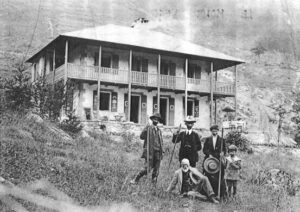
Abstract presented at the XXXV congress of the ANMS (Associazione Nazionale dei Musei cientifici – National Association of Scientific Museums) held in Milan, 13-16 October 2026 (https://www.anms.it/notizie/dettaglio_notizia/92)
Clarence Bicknell (1842–1918) was an eclectic figure—a naturalist, archaeologist, artist, and Esperantist. Hailing from a wealthy English family, he moved to Bordighera (Imperia) in 1878, where he spent the rest of his life and founded the museum that bears his name—an institution now managed by the Istituto Internazionale di Studi Liguri (IISL). From 1897 until his death, he dedicated himself to the study of the prehistoric rock engravings in the Vallée des Merveilles (Maritime Alps), the work for which he is best known today. Over the years, Bicknell assembled an extensive natural history collection comprising thousands of fossils, geological and mineralogical specimens, and zoological samples, largely acquired through his own field collecting and exchanges with other scholars. This significant collection is currently being studied as part of a research agreement between the CNR (National Research Council of Italy) and the IISL.
Among the numerous exchanges that have been reconstructed through an analysis of the collection and of the relevant archival documents held at the Museo Bicknell, those between Bicknell and the mineralogist Alberto Pelloux (1868–1948) are particularly significant. The two men maintained a lasting friendship, evidenced by dozens of letters, notes, and postcards preserved in the IISL archive. The Bicknell geo-mineralogical collection includes more than thirty specimens donated by Pelloux, most of which bear the label of the “Pelloux Mineralogical Collection”. The original registers for that collection—kept in Bari (see below)—record the removal of each specimen from the collection and its subsequent donation to the Museo Bicknell.
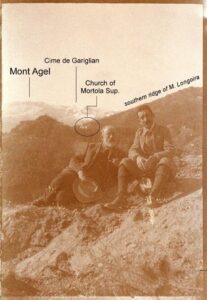
Over the years, Bicknell himself donated numerous samples to Pelloux, collected specifically for his friend during trips to Italy and abroad. The samples were discovered by analysing Pelloux’s geological-petrographic collection, acquired by the Regional Museum of Natural Sciences in Turin in 1987, and consisting of approximately 500 rock samples and 600 thin sections, and the well-known Alberto Pelloux mineralogical collection, consisting of 11,000 samples, acquired by the University of Bari in 1957 and currently kept at the Museum of Earth Sciences of that university. Analysis of the correspondence between Bicknell and Pelloux also revealed specific references to many of these samples (for example, referring to a recent trip to the island of Capraia, Bicknell wrote: “Dear friend […] here I am, sending you my regards—instead of being No. 121 with the 120 convicts of Capraia—and, to tell you the truth […] I would have deserved to be put in jail, because the first thing I did upon entering the penal agricultural colony was to steal some sour cherries—and the second was to make off with bits of the island for you—what thieves!”.
This work contributes to a reflection on the significance of objects in historical collections—which often bear witness to a network of contacts among scientists, collectors, and cultural institutions—thereby adding new knowledge to museum heritage.