We got to know and respect Elizabeth Scott, Director of the Guildhall Art Gallery in 2023/4 when working on the proposed exhibition of Clarence Bicknell’s botanical art. She was very positive about him and the project and we only failed by our inability to raise the sponsorship necessary to put it on. Elizabeth has recently been interviewed for the Chinese art organization Sheng Xinyu Art https://www.shengxinyuart.com.
They have also interviewed Marcus Bicknell as an introduction to the exhibition of Clarence Bicknell’s botanical art which they are putting on in Treviso Italy in October. read more at https://clarencebicknell.com/clarence-bicknell-botanical-art-at-le-venezie-watercolor-festival-2026/
The long interview with Elizabeth starts… “You authored the book Guildhall Art Gallery Director’s Choice in 2020, which is often regarded as a concentrated expression of a gallery director’s profound understanding of their collection. Could you share with us how you first entered the world of art galleries and museums? Having transitioned from an archaeology background to museum management, how has this interdisciplinary training shaped your perspective on collections today?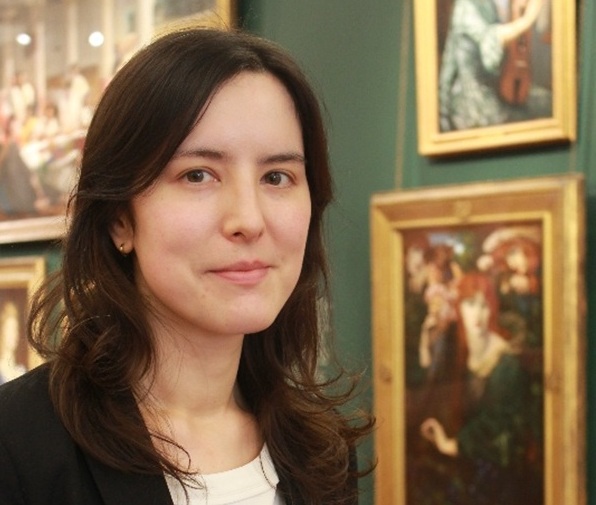
“Studying archaeology taught me to look closely at material culture and to understand objects not simply as things in themselves, but as evidence of human lives, beliefs and societies. Archaeology is fundamentally about people and piecing together stories from fragments, asking questions about context, provenance and meaning, and that way of thinking has stayed with me throughout my career.
“Working in art history and archaeology, I don’t see those disciplines as separate. They are both concerned with understanding people through the things they create, use and value. Whether it’s a Roman artefact or a contemporary painting, I’m interested in the human stories that objects reveal and the ways in which museums can make those stories meaningful for today’s audiences.
“That perspective has shaped my approach throughout my career. At London Transport Museum, for example, I wasn’t simply interpreting transport history; I was exploring the social, cultural and design histories embedded within the collection. Similarly, at Guildhall Art Gallery, I wanted the collection to be understood not just as a remarkable group of paintings, but as a record of London’s evolving identity, reflecting its people and places, and as windows into the social, political and cultural contexts in which they were created.
“Writing Director’s Choice was a wonderful opportunity to reinforce this. Rather than producing a catalogue of the collection’s ‘greatest hits’, I wanted to create something more personal that reflected the richness and diversity of the collection and encouraged readers to look more closely at familiar works, discover lesser-known pieces and think about the stories that connect them.
“More broadly, I think my interdisciplinary background has helped me to look beyond traditional art historical narratives. Archaeology encourages you to think across time, disciplines and cultures, and to value context as much as the object itself. That has influenced how I approach collections today, whether through interpretation, exhibitions or acquisitions. I’m always asking not just, what is this object? but why does it matter?, whose story does it tell? and how can we help different audiences connect with it?
Read more at https://www.shengxinyuart.com/index/interview/detail?id=NDI0 and scroll half way down after the Chinese text to find the English.